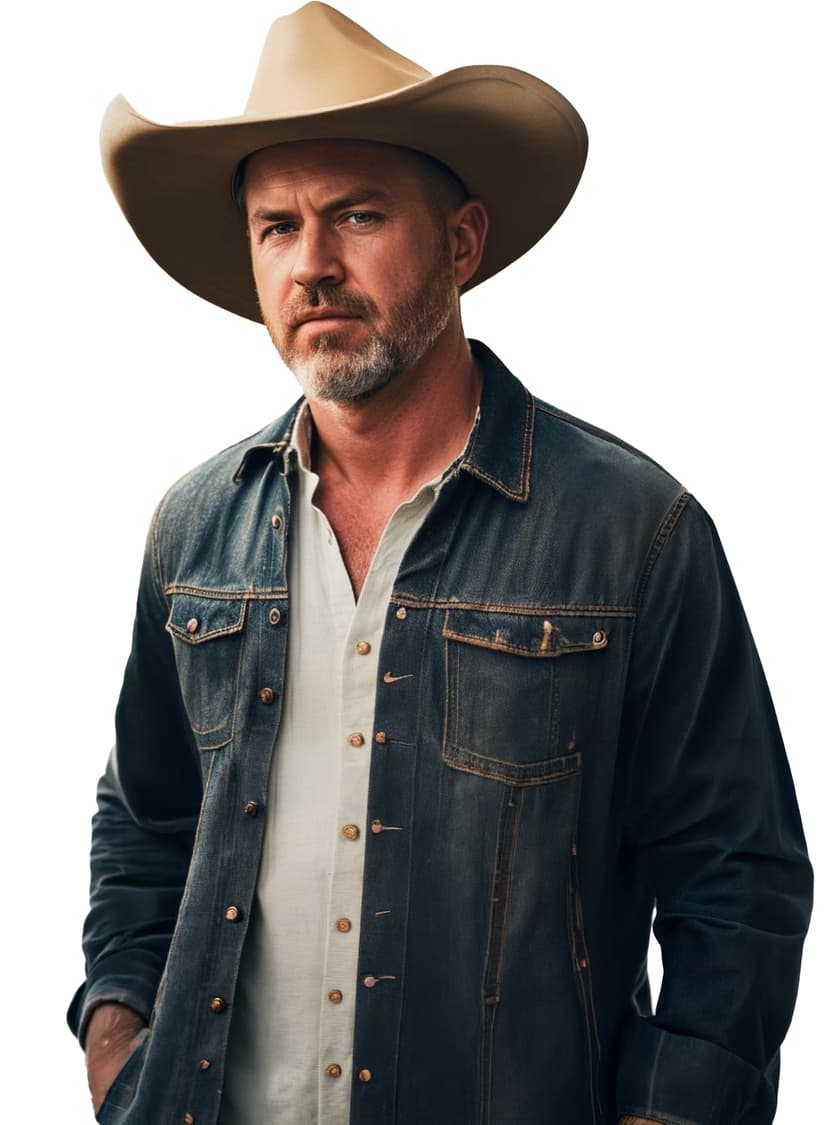
My friend Paul once described me as the Human Zapier.
That checks out.
I'm a solid programmer and a decent designer, but those are means to an end. Over the last 17 years I've built and led B2B SaaS products and companies, and the pattern is usually the same: more ideas than capacity, lots of talk, and a gap between what we founders can see is possible and what actually gets out the door.
I'm obsessed with one question: "What's the smallest thing we could build that would actually change this business?"
I get a genuinely unhealthy amount of satisfaction from eliminating inefficiency. Not by talking about it — by shipping tools that make it disappear. I won't stop until the solution feels obvious, simple, and a little fun to use.
What I've Built
Over the past decade, I've built commerce tools for DTC brands on Shopify to help them make more money.
At CartHook, we brought post-purchase upsells to Shopify — adapting a proven funnel tactic from digital products to physical commerce. We later worked directly with Shopify to make post-purchase upsells a native feature. At its peak, CartHook processed ~$1B/year in GMV. Over its lifetime, its post-purchase upsells generated $300M in extra revenue for merchants. CartHook was acquired by Pantastic in 2022.
At Rodeo, we launched one of the first native Shopify subscription apps (acquired by Recharge) and later pivoted to an LTV growth platform that began as a small internal feature.
AG1licensed my team's tech for paid growth through CartHook, IDEO and Disney hired me as a consultant, and my work has been featured in The New York Times, Harvard Nieman Lab, and Mashable.
How I Work Now
A CEO has an AI idea that, if it works, could be a seven-figure swing for the business. Their team says it'll take 6 months and a $250K-$500K budget to find out. Nobody's sure if the idea is even good. Months pass. Nothing ships. You're moving too slow and you don't really know why.
Or the founder has personally hacked something together with AI in a weekend, and it suddenly highlights a weird gap between how fast they know things could move and how slow the current process actually runs. Now they can't tell if the plan is legit or bullshit.
I fix that.
Most teams start with a AI Diagnostic. I vet the idea and map out what to ship or change first. If there is a build worth doing, every dollar is credited toward it.
From there it is usually a 1‑Week AI Build Sprint. I take what we scoped in the Diagnostic and turn it into a working proof of concept scoped to one workflow that you can test with real users or your team, learn from, and build on. For bigger or more complex bets, we can stack additional weeks.
Often, once that first product is live, companies want their team building this way on their own. That's what the AI Training Pack is for — embedding AI workflows into how your team already works so you don't need me for the next one.
I don't sell frameworks. I build, test, and iterate as a practitioner — using the same tools and systems I recommend.
I spent six months using a well-documented prompting technique — one that genuinely solved a real problem when I adopted it. I got it from podcasts, Reddit threads, the usual places. It worked. Then the models improved and the underlying issue went away. But I kept doing it because I had no way of knowing when it stopped mattering. I was adding unnecessary steps to every interaction and had no idea. The gap between what's possible and what most teams are actually doing compounds over time.
"Leveling up AI fluency is way harder than people think. We've been at it for nine months. Ben's the guy I go to when I get stuck."
— Bo Weathersbee, CEO, Till CFO
Why I Do This
I'm on a mission to build damn good tools that help people make more money — and enjoy using them.
When I'm not building, I'm usually snowboarding or shooting photos.
What to Do Next
If you've got an AI idea and you want to see it live in about a week, start with the AI Diagnostic.